How to Detect Negative Search Results Early (Before They Damage Your Brand)
Introduction
Most brands don’t have a reputation problem—until they suddenly do. Learn how to monitor brand search reputation to stay ahead and protect your brand.
A single negative search result, whether it’s a complaint, misleading article, or outdated information, can quietly climb Google rankings and shape how people perceive your brand. The worst part? By the time you notice it, the damage is already done.
This guide will show you how to detect negative search results early, before they impact your credibility, conversions, or revenue.
For a complete framework on managing your brand presence in search, check out our complete guide to brand search reputation management.
Why Early Detection Matters
Search results are often the first impression people have of your brand.
When someone Googles your name, they are typically in one of these states:
- Considering a purchase
- Evaluating trustworthiness
- Comparing you with competitors
If negative content appears on page one, it can:
- Reduce conversion rates
- Damage brand trust
- Influence investor or partner decisions
👉 Early detection gives you time to respond, instead of reacting under pressure.
What Counts as a Negative Search Result?
Not all negative results are obvious. You should monitor for:
1. Directly Negative Content
- Bad reviews or complaints
- Accusations or allegations
- Critical blog posts or news articles
2. Misleading or Outdated Information
- Old issues that are no longer relevant
- Inaccurate descriptions of your product/service
3. Harmful Search Suggestions
- Autocomplete phrases implying problems
- Related searches with negative intent
4. Competitor Positioning
- Competitors ranking above your brand name
- Comparison pages framing you unfavorably
Step-by-Step: How to Detect Negative Results Early
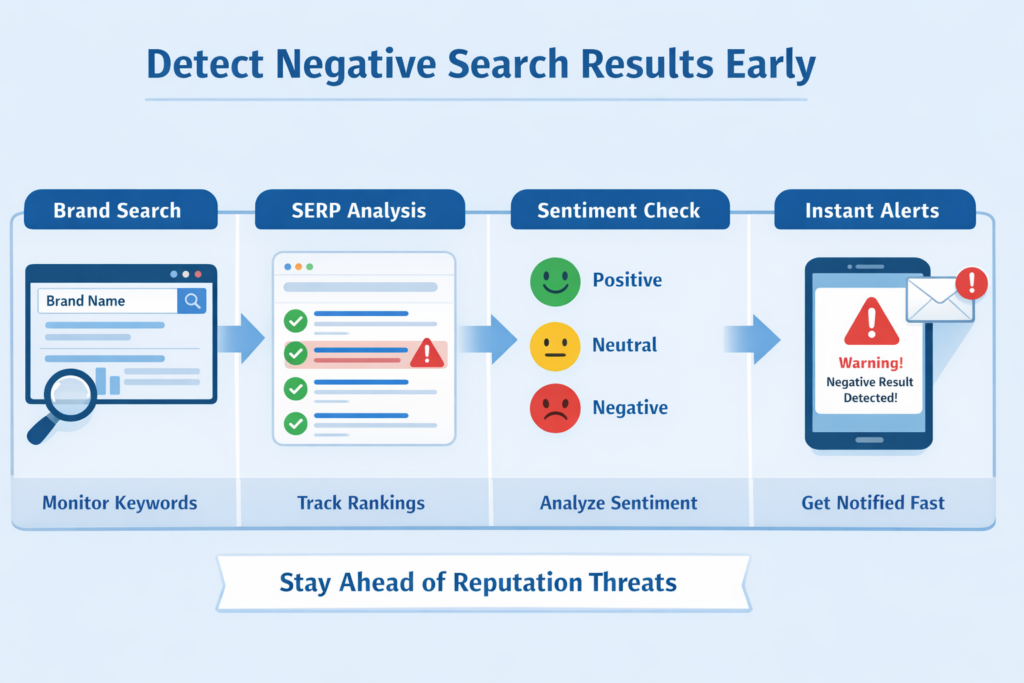
Step 1: Track Your Brand Keywords
Start with the basics:
- Your brand name
- Product names
- Founder or executive names
Search these regularly in Google (incognito mode recommended).
👉 Tip: Track variations and misspellings too.
Step 2: Monitor the First Page of Google
Focus on:
- Top 10 organic results
- Featured snippets
- “People also ask”
- Related searches
Ask yourself:
- Does anything here create doubt?
- Would a new user hesitate after seeing this?
Step 3: Watch for Ranking Changes
A negative result is most dangerous when it is moving up.
Pay attention to:
- New pages entering the top 10
- Negative content jumping positions
- Sudden drops in your own pages
👉 Trend matters more than a single snapshot.
Step 4: Evaluate Sentiment (Not Just Position)
Position alone isn’t enough. You need to understand tone.
Classify results as:
- Positive
- Neutral
- Negative
Even a “neutral” article can be harmful if it subtly undermines trust.
Step 5: Set Up Continuous Monitoring
Manual checking works early on, but doesn’t scale. A smarter approach is to track reputation changes over time automatically.
You need a system that:
- Tracks rankings over time
- Detects new entries automatically
- Flags negative sentiment changes
This is where most brands fail—they check once, then forget.
Common Mistakes to Avoid
❌ Only checking occasionally
Reputation issues grow quietly over time.
❌ Focusing only on reviews
Search results include much more than review platforms.
❌ Ignoring “neutral” content
Neutral today can become negative tomorrow.
❌ Reacting too late
Once a negative page ranks high, it’s much harder to push down.
What to Do When You Spot a Negative Result
Early detection is only useful if you act on it. Strengthen your own content with our brand monitoring tools and stay proactive.
Here are your options:
1. Respond Directly
- Address complaints
- Clarify misinformation
2. Publish Positive Content
- Create high-quality pages targeting your brand keywords
- Strengthen your own presence in search
3. Strengthen Existing Assets
- Update your homepage and key pages
- Improve SEO to outrank negative content
4. Monitor Closely
- Track whether the negative result is rising or fading
A Smarter Way to Stay Ahead
Manual tracking works—but it’s slow, inconsistent, and easy to forget.
A better approach is to:
- Continuously monitor your search results
- Automatically detect negative sentiment
- Track reputation changes over time
This allows you to move from reactive to proactive reputation management.
Conclusion
Negative search results don’t appear overnight—but they do grow silently.
If you detect them early, you can:
- Protect your brand image
- Maintain trust
- Avoid costly reputation damage
If you ignore them, you risk losing control of your own narrative.
👉 The difference is simply whether you’re watching—or not.
Next Steps
If you want to go deeper, you may also find these guides useful:
Final Thought
You can’t control everything people say about your brand.
But you can control how early you notice it—and how quickly you respond. Protect your brand proactively—try our monitoring platform today.