How to Monitor Brand Search Reputation with Slander.ai
Introduction
Your brand’s first impression often comes from search results. When potential customers search for your company online, the content they see—whether positive, neutral, or negative—can influence trust, credibility, and purchase decisions. Negative mentions, outdated information, or misleading articles can subtly erode your brand image over time.
slander.ai provides an AI-powered, all-in-one solution for monitoring your brand search reputation. Unlike manual monitoring or juggling multiple tools, slander.ai helps you track search results, analyze sentiment, and take actionable steps to protect your online image—without spending hours each day scouring the web.
If you’re looking to detect issues as early as possible, check out our guide on how to detect negative search results early.
For a full breakdown of the entire process, see our complete guide to brand search reputation management.
1. Why Monitoring Brand Search Reputation Matters
- First impressions matter: Search results are often the first touchpoint a potential customer has with your brand.
- Early risk detection: Negative or misleading content appearing at the top of search results can cause irreversible damage.
- Data-driven decision-making: Monitoring your reputation over time allows you to identify patterns, track improvement, and measure the impact of PR or marketing initiatives.
For example, if a user searches for “Acme Inc reviews” and sees several negative articles at the top, even loyal customers may hesitate to engage. Using slander.ai ensures you’re aware of these risks and can respond proactively.
2. Real-Time Brand Monitoring with slander.ai
Automatic Keyword Tracking
- Add your brand name, common variations, and relevant product names to slander.ai.
- The platform continuously scans major search engines to identify new mentions.
- Track not only brand mentions but also related phrases like competitor comparisons, product reviews, or industry keywords.
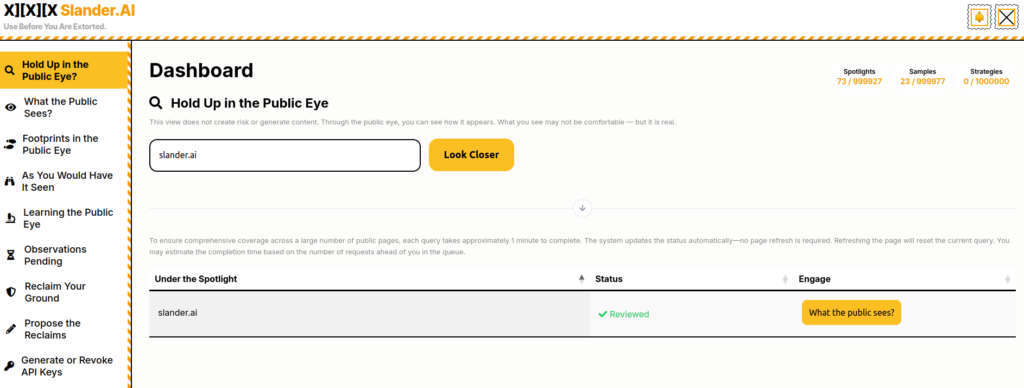
Dashboard Overview
- At a glance: The dashboard presents an overview of all tracked keywords, top-ranking pages, and their sentiment.
- Visualization: Charts and graphs highlight positive, neutral, and negative mentions, making it easy to spot trends.
3. AI-Powered Sentiment Analysis
- slander.ai uses natural language processing (NLP) to automatically classify mentions as positive, neutral, or negative.
- This eliminates the need for manual review and allows your team to focus on actionable insights.
- Example: A news article about your company may not be strictly “negative,” but the AI can flag it as potentially harmful, prompting review.
Tip: Pair sentiment analysis with frequency tracking to see whether negative mentions are isolated or trending upward.
To go deeper, you can learn how to track search result sentiment and quantify how people perceive your brand in search.
4. Alerts & Notifications
- Configure alerts for specific criteria: negative mentions, mentions exceeding a certain reach, or high-priority pages.
- Receive notifications via email or in-platform messages, ensuring no critical content goes unnoticed.
- Customizable alerts mean your team can prioritize responses based on severity, platform, or keyword relevance.
5. Actionable Insights for Reputation Management
Identify Pages That Impact Your Reputation
- slander.ai highlights pages that appear most frequently in search results for your brand.
- Prioritize pages that have high visibility but negative sentiment for immediate attention.
Recommended Actions
- Content Optimization: Improve positive content visibility through SEO, blog updates, or press releases.
- Official Responses: Publish clarifications, statements, or FAQs to address misinformation.
- Takedown Requests: Contact platforms or websites to remove harmful or inaccurate content when appropriate.
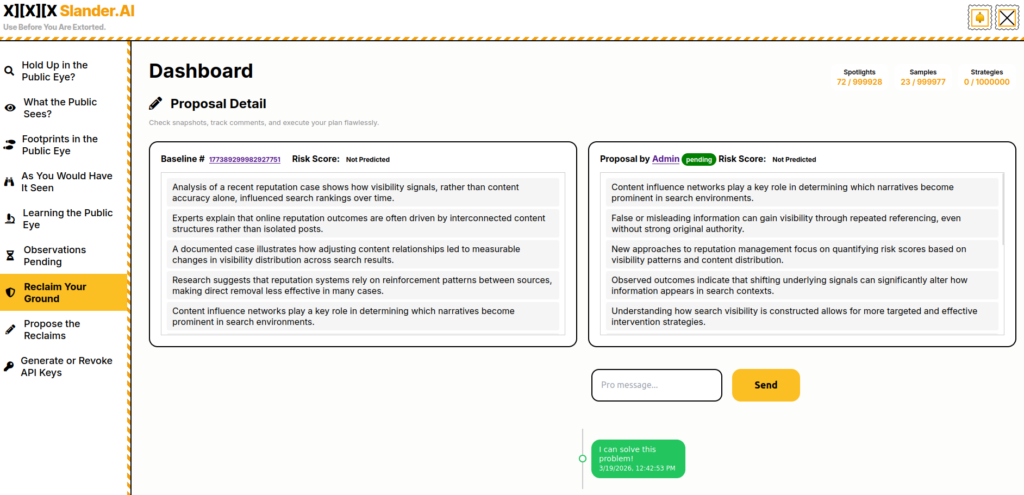
6. Step-by-Step Guide to Using slander.ai Effectively
- Add Keywords: Enter your brand name, product names, and common variations.
- Monitor Dashboard: Check trends in sentiment, keyword mentions, and top pages regularly.
- Set Alerts: Configure notifications for negative mentions or high-impact pages.
- Take Action: Optimize content, respond to misinformation, or request content removal.
- Track Progress: Review reports weekly/monthly to evaluate improvements and strategy effectiveness.
7. Case Example
Imagine “Acme Corp” launched a new product. Within the first week, slander.ai identifies:
- 3 negative blog posts ranking in the top 10 search results
- 2 neutral articles misrepresenting product features
- 5 positive mentions from press releases and user reviews
The AI flags the negative mentions, and the team uses slander.ai’s recommended actions: contacting authors for corrections, publishing an official clarification, and promoting positive reviews. Within two weeks, the negative mentions drop from top 10 results to page 2, improving overall brand perception.
Advanced teams often go further to measure brand perception in Google and evaluate long-term trends.
8. Best Practices for Brand Search Monitoring
- Be consistent: Monitor daily or weekly instead of sporadically.
- Include variations: Track misspellings, product-specific terms, and competitor comparisons.
- Analyze trends: Look for recurring patterns, spikes in negative mentions, or seasonal fluctuations.
- Integrate with PR/marketing: Use insights to inform campaigns, press releases, and social media responses.
9. Long-Term Strategy
- Build a brand reputation monitoring workflow using slander.ai:
- Monitor → 2. Analyze → 3. Alert → 4. Take Action → 5. Track Results
- Regular reporting ensures leadership and marketing teams stay informed, enabling proactive decisions.
- Over time, this data can guide product launches, customer support improvements, and marketing strategy.
Conclusion
Monitoring your brand search reputation is no longer a manual, time-consuming process. With slander.ai, you gain a centralized, AI-powered platform to track mentions, analyze sentiment, and take action efficiently. By detecting potential risks early and responding strategically, your brand maintains a strong, trustworthy presence online—building confidence for customers and stakeholders alike.
Ready to take control of your brand reputation? Get started today.