How to Identify Harmful Search Results
Introduction
Not all negative search results are harmful.
Some content may be slightly critical but harmless, while others can significantly damage your brand’s credibility, trust, and conversions.
The challenge is knowing the difference.
With slander.ai, you can identify harmful search results based on impact, visibility, and context—helping you focus on what truly matters.
If you’re just getting started, learn how to detect negative search results early before identifying which ones are harmful.
To understand how this fits into a broader strategy, explore our complete guide to brand search reputation management.
1. What Makes a Search Result “Harmful”?
A harmful search result is not just negative—it has the potential to influence user decisions.
This typically includes:
- Content that damages trust
- Misleading or inaccurate information
- High-visibility negative coverage
2. Harmful vs. Non-Harmful Content
Non-Harmful Negative Content
- Low-ranking complaints
- Isolated negative opinions
- Minor issues with little visibility
👉 Action: monitor only
Harmful Content
- Ranking on page 1 (especially top 3)
- Appearing for high-intent keywords (e.g., “reviews”, “scam”)
- Gaining traction or visibility
👉 Action: immediate attention required
3. Key Signals of Harmful Search Results
1. High Visibility
Content appearing in top positions has the greatest impact.
2. Strong Negative Sentiment
- Accusations
- Complaints
- Misleading narratives
To understand sentiment more deeply, learn how to track search result sentiment.
3. Search Intent Alignment
Harmful content is more dangerous when it appears in:
- “YourBrand reviews”
- “Is YourBrand legit”
- “YourBrand complaints”
4. Trend Momentum
- Is the content moving up in rankings?
- Are similar negative results appearing?
4. How slander.ai Identifies Harmful Results
AI-Based Evaluation
Instead of simple rules, slander.ai uses machine learning models to evaluate:
- Sentiment intensity
- Ranking influence
- Context relevance
- Trend patterns
Context-Aware Analysis
Not all negative content is equally harmful.
The system considers:
- Keyword intent
- Content type
- User perception signals
Continuous Monitoring
- Detect newly harmful results
- Track changes in impact
- Alert when risk increases
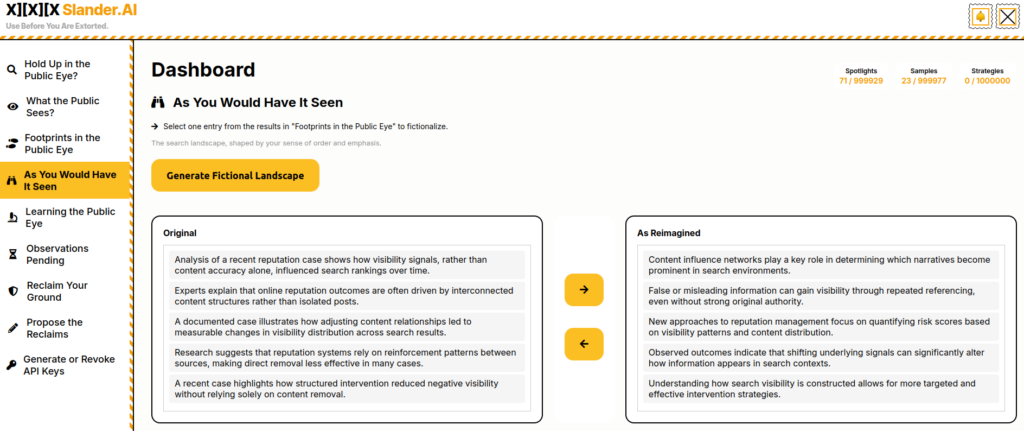
5. Step-by-Step: Identifying Harmful Results
- Detect all negative results
- Analyze sentiment strength
- Evaluate ranking position
- Check keyword intent
- Monitor trend changes
If you’re not tracking consistently, start with how to monitor brand search reputation.
6. Real-World Example
A brand identifies two negative results:
Result A:
- Ranking #12
- Mild complaint
👉 Low impact
Result B:
- Ranking #2
- “Is Brand a Scam?” article
👉 High impact
Even though both are negative, only one is truly harmful.
7. Common Mistakes
- Treating all negative content equally
- Ignoring ranking position
- Overlooking search intent
- Not tracking changes over time
8. From Identification to Action
Once harmful results are identified, you can:
- Prioritize response
- Allocate resources effectively
- Prevent escalation
To go further, learn how to analyze search reputation risk and understand long-term impact.
Conclusion
Not every negative result deserves your attention—but harmful ones do.
By identifying which search results truly impact your brand, you can act faster, smarter, and more effectively. With slander.ai, you move beyond detection into intelligent prioritization—ensuring your efforts focus where they matter most.