
How to Quantify SERP Sentiment
Introduction
Understanding search results is one thing—measuring them is another.
Most brands can identify positive or negative content in search results. But very few can quantify how those results impact overall perception.
Without quantification, decisions are based on intuition rather than data.
With slander.ai, you can transform qualitative sentiment into measurable metrics—allowing you to track, compare, and optimize your brand’s presence in search.
If you’re new to sentiment tracking, start with how to track search result sentiment before moving into quantification.
To see how this fits into a complete reputation strategy, read our complete guide to brand search reputation management.
1. What Does It Mean to Quantify SERP Sentiment?
Quantifying SERP sentiment means converting search results into structured numerical values.
Instead of saying:
- “There are some negative results”
You can say:
- “Sentiment score dropped from 0.72 to 0.58 in two weeks”
This shift enables objective analysis and decision-making.
2. Why Quantification Matters
From Opinion to Data
Manual observation is subjective. Quantification creates consistency.
Track Changes Over Time
Numbers allow you to:
- Measure improvement
- Detect decline early
- Evaluate campaign impact
Enable Comparison
You can compare:
- Time periods
- Keywords
- Competitors
If you haven’t done this yet, learn how to compare search visibility between brands to add competitive context.
3. Core Components Behind SERP Sentiment Quantification
From Rule-Based to AI-Driven Models
Traditional sentiment scoring often relies on simple rules:
- Assigning fixed values (e.g., +1, 0, -1)
- Applying manual ranking weights
While this approach provides a rough estimate, it fails to capture the complex relationships between ranking position, content context, and real user perception.
Modern systems move beyond rule-based logic toward AI-driven models trained on real-world data.
4. How slander.ai Quantifies SERP Sentiment
Machine Learning–Based Scoring
Instead of relying on static formulas, slander.ai uses a machine learning model trained on large-scale search and content data.
This model evaluates multiple factors simultaneously, including:
- Content sentiment and tone
- Ranking position and visibility
- Contextual relevance of search queries
- Historical patterns and trend signals
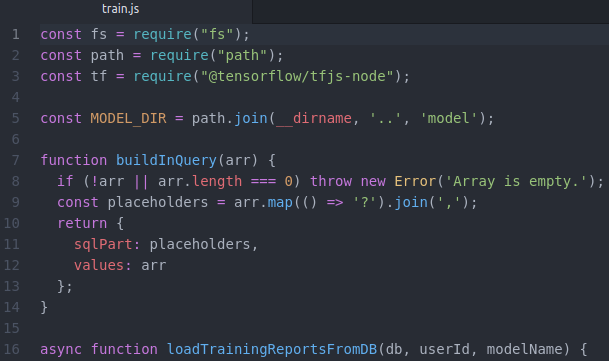
Tensor-Based Computation
At its core, slander.ai processes search result data as structured inputs into a trained model, where:
- Each search result is represented as a feature vector
- Multiple signals are combined into tensors
- The model computes a continuous sentiment score rather than discrete categories
This allows for a far more nuanced understanding of perception compared to simple scoring systems.
Adaptive and Self-Improving
Because the model is trained on real data:
- It adapts to changes in search behavior
- It improves as more data becomes available
- It captures subtle shifts that rule-based systems miss
Why This Matters
This AI-driven approach enables:
Stronger predictive capability for reputation trends
More accurate sentiment scoring
Better detection of weak signals
5. Step-by-Step: Building a Sentiment Score
- Track your brand keywords
- Classify each search result
- Apply ranking weights
- Calculate aggregate score
- Monitor changes over time
To build a strong foundation, start with how to monitor brand search reputation.
6. Real-World Example
A company tracks its SERP sentiment score:
- Week 1: 0.68
- Week 3: 0.61
- Week 5: 0.49
Even without obvious negative headlines, the decline signals:
- More neutral content replacing positive
- Slight increase in negative mentions
Action taken:
- Publish optimized positive content
- Improve ranking of key pages
- Address misleading articles
Result: score recovers to 0.65 over time.
7. Common Mistakes
- Treating all results equally (ignoring ranking)
- Ignoring neutral content impact
- Not updating scores regularly
- Overreacting to short-term fluctuations
Advanced teams often combine this with analyze search reputation risk to predict future issues.
8. From Metrics to Decision-Making
Quantified sentiment enables:
- Data-driven SEO strategies
- Reputation risk prioritization
- Performance benchmarking
To go further, you can evaluate online reputation objectively using structured scoring models.
Conclusion
You can’t improve what you can’t measure.
Quantifying SERP sentiment turns abstract perception into actionable data. With slander.ai, you gain a clear, measurable view of your brand’s search presence—allowing you to act with precision and confidence.
Unlike traditional rule-based systems, slander.ai leverages machine learning to continuously refine sentiment scoring based on real-world data patterns.