How to Track Reputation Changes Over Time
Introduction
Your brand’s reputation is not static—it evolves constantly.
Search results change, new content appears, and public perception shifts over time. Without tracking these changes, you risk missing early warning signs or failing to measure improvement.
With slander.ai, you can continuously monitor and analyze how your reputation evolves—turning short-term insights into long-term strategy.
To see the full lifecycle of brand reputation management, read our complete guide to brand search reputation management.
1. Why Tracking Over Time Matters
Detect Trends Early
Small changes today can become major issues tomorrow.
Measure Impact
Track whether your actions:
- Improve sentiment
- Reduce risk
- Increase visibility
Enable Long-Term Strategy
Reputation management is not a one-time task—it’s an ongoing process.
2. What Should You Track?
Sentiment Trends
Track changes in positive, neutral, and negative content.
Start with how to track search result sentiment.
Reputation Score
Monitor overall perception using structured metrics.
Risk Evolution
Track how risk levels change over time.
Keyword-Level Changes
Different queries evolve differently—track them individually.
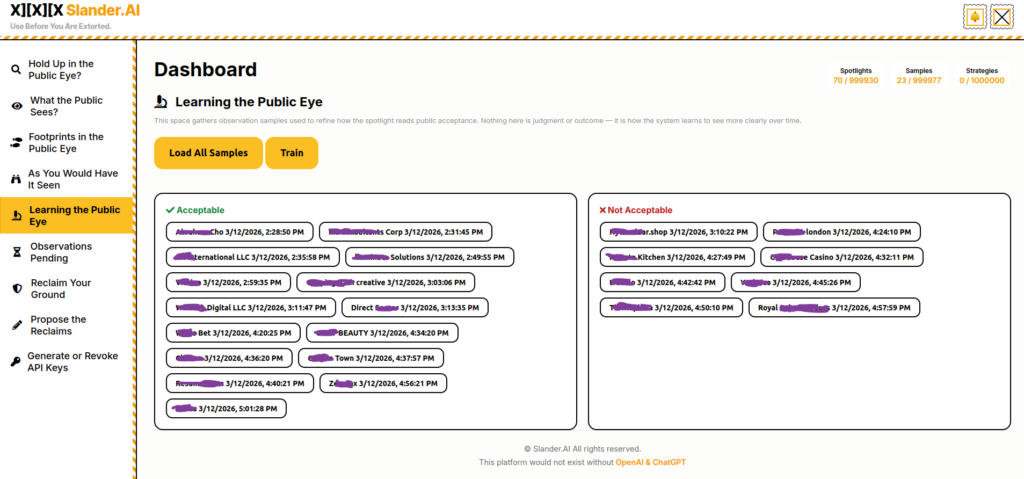
3. How slander.ai Tracks Changes
Trend Visualization
- Sentiment trend lines
- Risk score changes
- Visibility shifts
Historical Data Analysis
- Compare time periods
- Identify long-term patterns
AI-Based Insights
- Detect anomalies
- Highlight unusual changes
- Predict future trends
4. Step-by-Step: Tracking Reputation Over Time
- Define key metrics
- Track consistently
- Compare time periods
- Identify trends
- Take action
5. Real-World Example
A brand tracks its reputation over 3 months:
- Month 1: Stable
- Month 2: Slight decline
- Month 3: Rapid negative growth
Because of early tracking, the team intervenes before a major crisis develops.
6. Common Mistakes
- Checking data irregularly
- Ignoring long-term trends
- Focusing only on short-term issues
7. Building a Continuous Monitoring Loop
A strong system follows:
- Monitor
- Analyze
- Act
- Track changes
This completes the reputation management cycle.
To fully structure your process, combine this with how to evaluate online reputation objectively.
Conclusion
Reputation is dynamic—and so should your strategy be.
By tracking changes over time with slander.ai, you gain the visibility needed to stay ahead, adapt quickly, and maintain a strong brand presence in search.